|
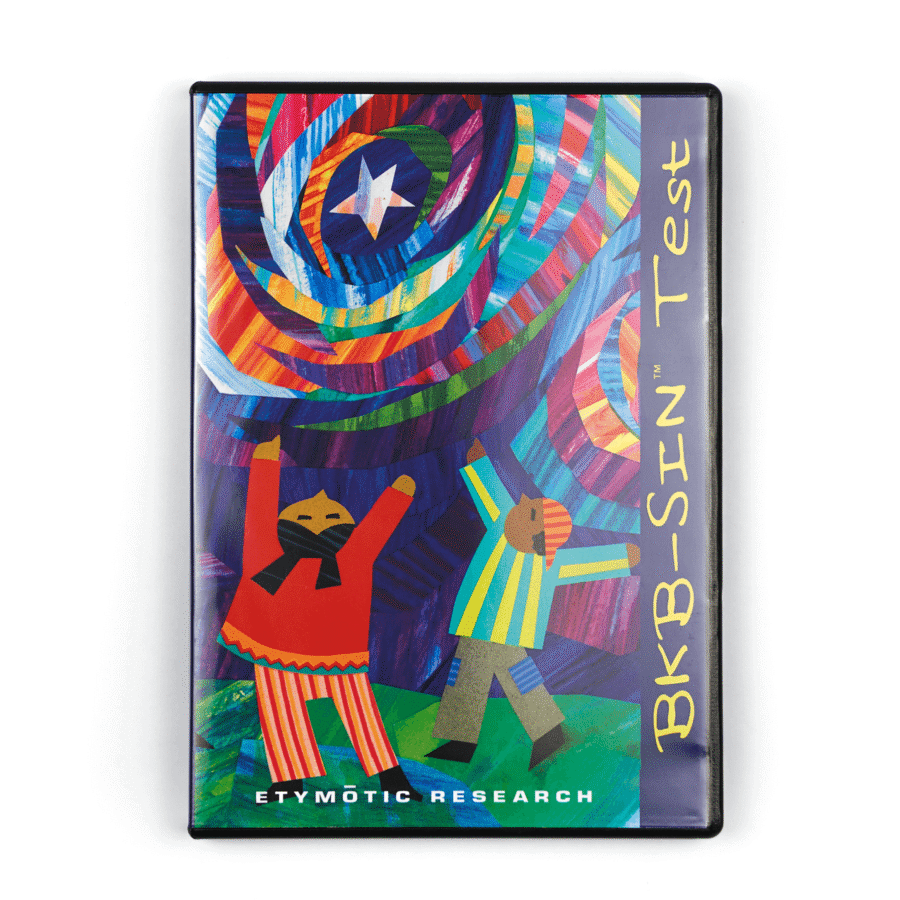
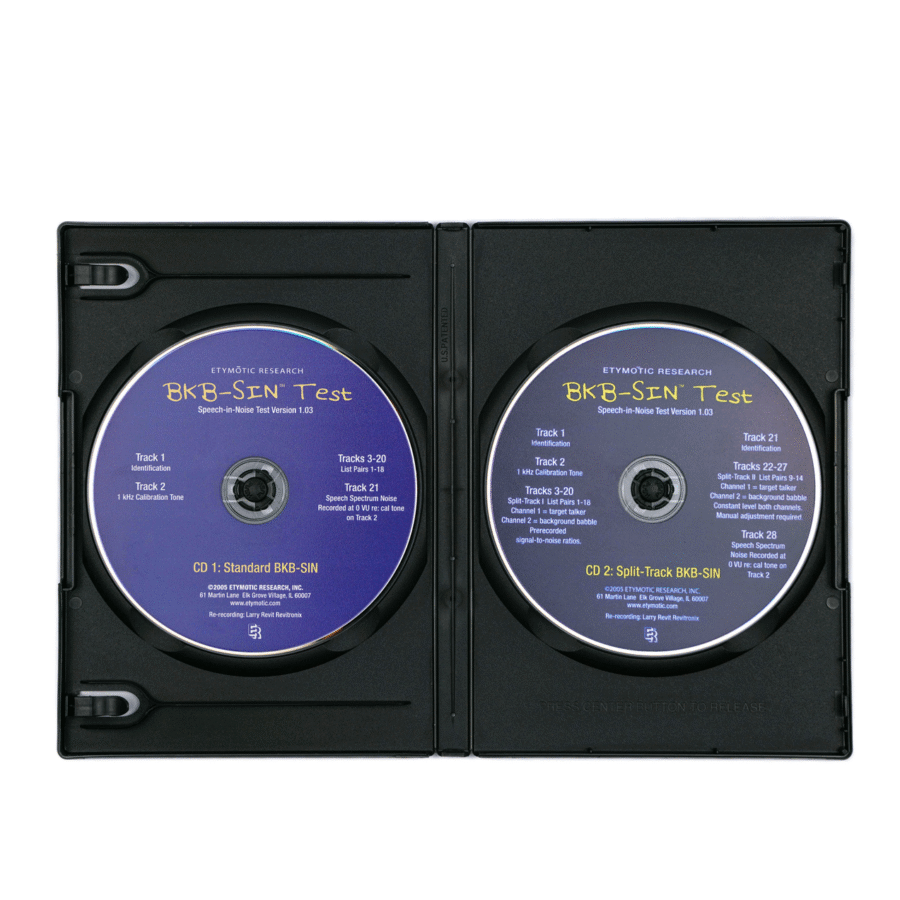
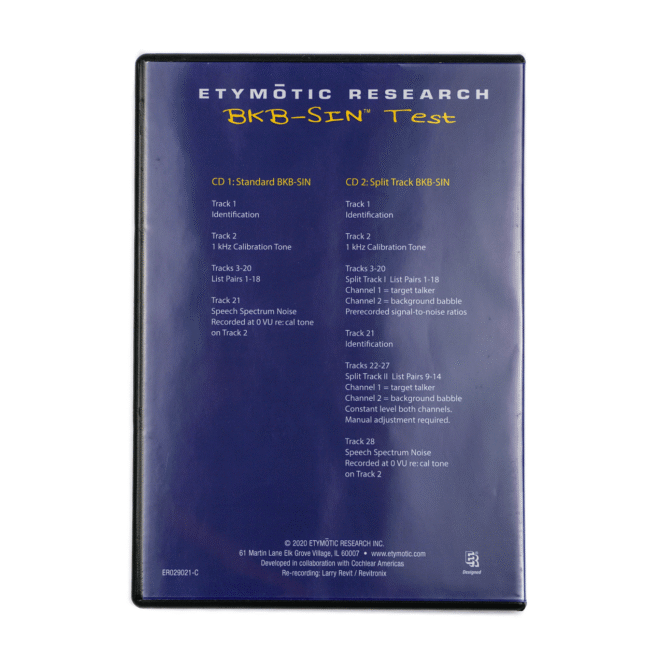
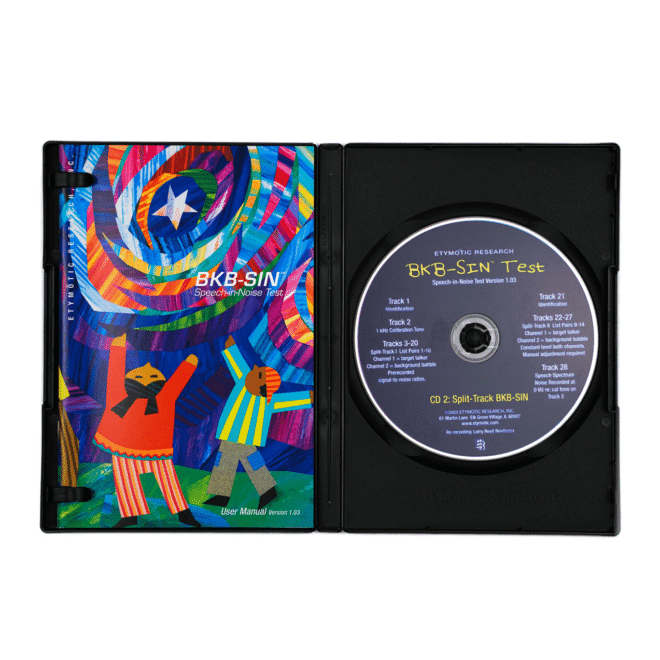
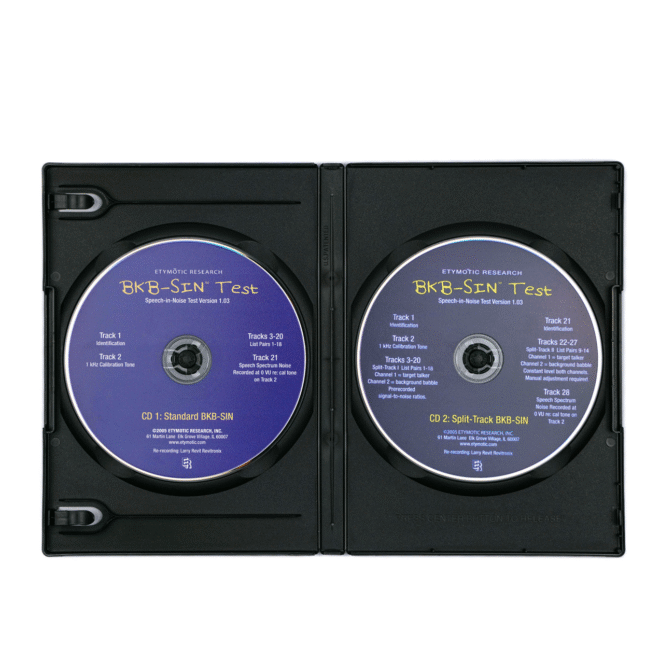
SNR loss is the increased signal-to-noise ratio required by a listener to understand speech in noise, as compared to normal performance. On the BKB-SIN Test normal-hearing adults obtain 50% correct at a -2.5 dB SNR. We call this the SNR-50. A hearing- impaired adult with an SNR-50 score of 7.5 dB would have a 10 dB SNR Loss [7.5 – (- 2.5) = 10]. The measurement of SNR loss is important because it cannot be reliably predicted from the pure tone audiogram.
Performance on any speech-in-noise test is affected by a number of factors, including:
- Speech materials (sentences, spondees, etc.)
- Background noise (shaped noise, multi-talker babble)
- Test setup (combined speech and noise vs. separated speech and noise)
- Audibility of the signal
- Reverberation
- Knowledge of the language
- Subject age
Due to these factors, absolute scores for an individual subject will vary across different speech-in-noise tests. BKB-SIN Test scores are reported in SNR Loss because it is substantially independent of calibration and test material. Calibration and/or test material differences that affect SNR-50 values equally for normal and hearing-impaired listeners will "cancel out" in the SNR Loss calculation.
Knowing the SNR loss allows the hearing professional to recommend the appropriate technology (e.g., omni-directional microphones, directional microphones, array microphones, FM systems) required for the listener to function in noisy situations. Knowing the SNR loss also enables the hearing professional to give the patient realistic expectations for their potential improvement in noise with a given technology, which often reduces unnecessary visits for hearing aid re-adjustments after the fitting.
Interpreting test results for children should be done on a case-by-case basis. Results should not be interpreted in isolation, but rather be integrated with other information regarding a child's speech/language abilities, educational performance and ability to function in the classroom. See "Test Interpretation (children)" in the BKB-SIN Test manual for more information.
|








Anne-Marie Rops (verified owner) –
Useful in a busy audiology practice & helpful when counseling clients with significant hearing loss
If a client can do the Q-Sin (scoring better than/less than 8 dB SNR) I wouldn’t complete the BKB. I start with the QSIN – and for clients who scored in the 8-10 dB range or worse, I would follow the Q-Sin with the BKB. I would ask the client to pay attention as I will be “quizzing” them afterwards as to the big differences between the two tests. Afterwards, I’d ask which test was easier, harder, and why? The differences are: Male vs. Female, short sentences vs. longer, cue vs. no cue, slower more deliberate and familiar speech vs. fast more unfamiliar speech etc.
I have given the tests in the sound field at normal speech level with the hearing aids
in vs. out and ask the family to listen in – as it settles the issue that the hearing aids are or are not helping the person hear better. Doing that also lets you set realistic expectations. Afterwards I counseled at length about hearing vs. understanding. This is a great lead in to recommend LACE (if feasible), use of a remote microphone, TV streamer, hearing loops and counseling on the modifications family can make in the interaction with the client (often I would share “Clear Speech and “Communication Strategies” handouts.) I’d counsel family members to talk in the manner of the “BKB presenter” and to get mom’s/dad’s attention by getting in the habit of using a “carrier phrase” before speaking.
Some family members who accompanied mom or dad to their hearing appointments made me cringe (often daughters or d-in-l) who wanted me to “fix” mom with hearing aids. They would complain that these new, expensive high tech hearing aids were not working or not any better than the old ones. Yet the daughters would keep talking way too fast, without pausing, or intonation and then when they did talk to mom they raised their voices to an almost anger level, with a tone of annoyance because mom is “just not getting it”.
I would keep the Oticon “Clear Speech” brochure handy and hand out HLAA (Hearing Loss Association of America) membership brochures, or extra Hearing Life Magazine copies.